 Add to Chrome
 Add to Firefox
 Add to Edge
LongCat-Flash-Thinking-2601 Technical Report
Jan 23, 2026
We introduce LongCat-Flash-Thinking-2601, a 560-billion-parameter open-source Mixture-of-Experts (MoE) reasoning model with superior agentic reasoning capability. LongCat-Flash-Thinking-2601 achieves state-of-the-art performance among open-source models on a wide range of agentic benchmarks, including agentic search, agentic tool use, and tool-integrated reasoning. Beyond benchmark performance, the model demonstrates strong generalization to complex tool interactions and robust behavior under noisy real-world environments. Its advanced capability stems from a unified training framework that combines domain-parallel expert training with subsequent fusion, together with an end-to-end co-design of data construction, environments, algorithms, and infrastructure spanning from pre-training to post-training. In particular, the model's strong generalization capability in complex tool-use are driven by our in-depth exploration of environment scaling and principled task construction. To optimize long-tailed, skewed generation and multi-turn agentic interactions, and to enable stable training across over 10,000 environments spanning more than 20 domains, we systematically extend our asynchronous reinforcement learning framework, DORA, for stable and efficient large-scale multi-environment training. Furthermore, recognizing that real-world tasks are inherently noisy, we conduct a systematic analysis and decomposition of real-world noise patterns, and design targeted training procedures to explicitly incorporate such imperfections into the training process, resulting in improved robustness for real-world applications. To further enhance performance on complex reasoning tasks, we introduce a Heavy Thinking mode that enables effective test-time scaling by jointly expanding reasoning depth and width through intensive parallel thinking.

TabletGaze: Unconstrained Appearance-based Gaze Estimation in Mobile Tablets
Jul 16, 2016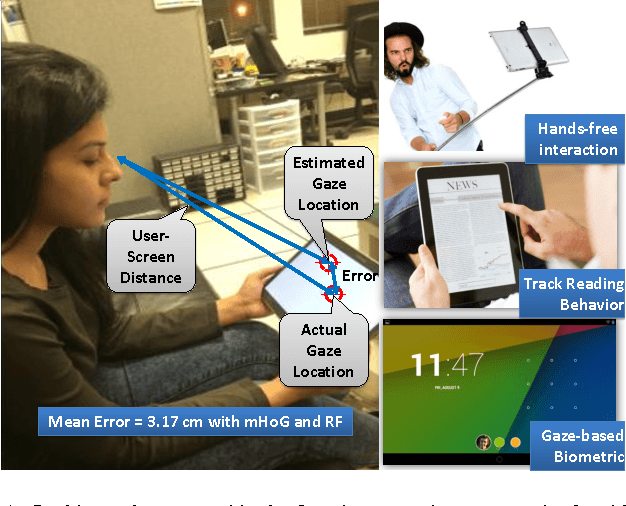
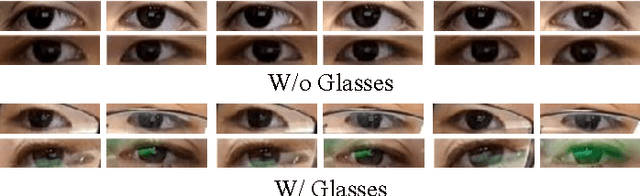
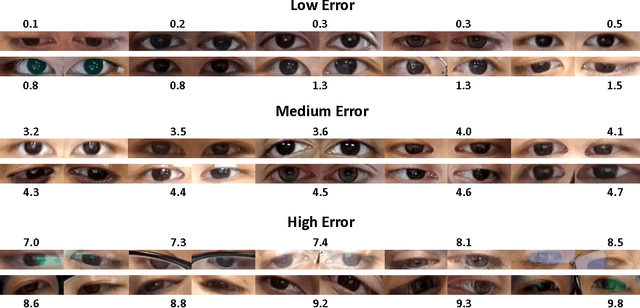
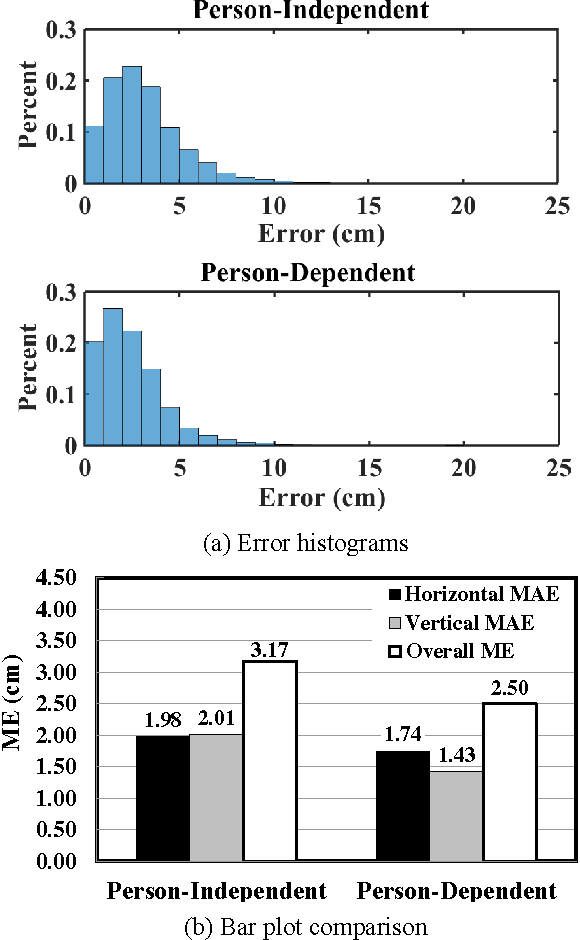
We study gaze estimation on tablets, our key design goal is uncalibrated gaze estimation using the front-facing camera during natural use of tablets, where the posture and method of holding the tablet is not constrained. We collected the first large unconstrained gaze dataset of tablet users, labeled Rice TabletGaze dataset. The dataset consists of 51 subjects, each with 4 different postures and 35 gaze locations. Subjects vary in race, gender and in their need for prescription glasses, all of which might impact gaze estimation accuracy. Driven by our observations on the collected data, we present a TabletGaze algorithm for automatic gaze estimation using multi-level HoG feature and Random Forests regressor. The TabletGaze algorithm achieves a mean error of 3.17 cm. We perform extensive evaluation on the impact of various factors such as dataset size, race, wearing glasses and user posture on the gaze estimation accuracy and make important observations about the impact of these factors.